Agentic engineering: what changes when AI agents write the code

The problem and why it matters
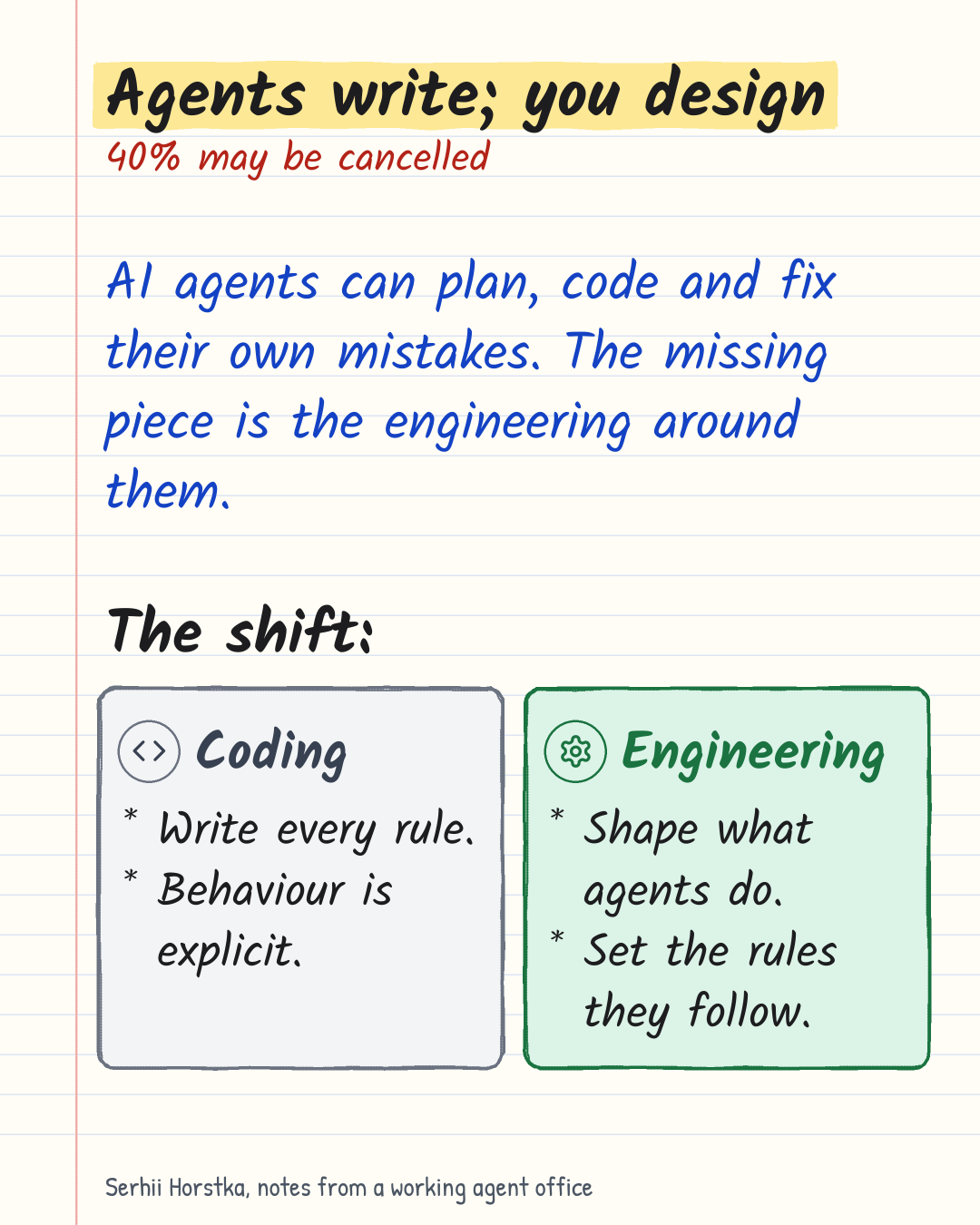
AI agents can now plan a task, write the code, run it and fix their own mistakes. Getting a demo to work has never been easier. Getting it to keep working is another story.
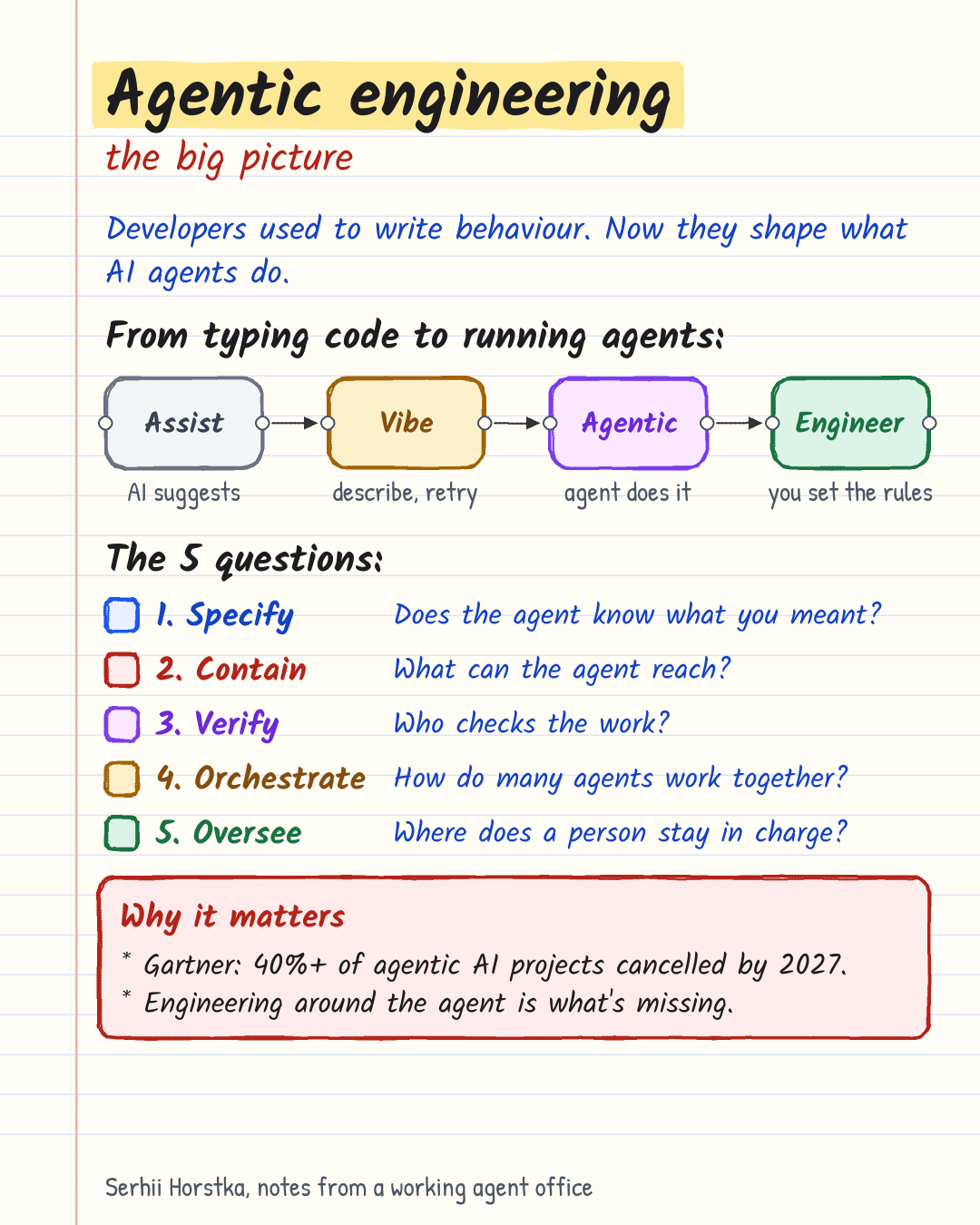
Gartner expects more than 40% of agentic AI projects to be cancelled by the end of 2027, because of rising costs, unclear value or weak risk controls (coverage of the forecast). The models are capable enough. What's usually missing is the engineering around them.
What agentic engineering is
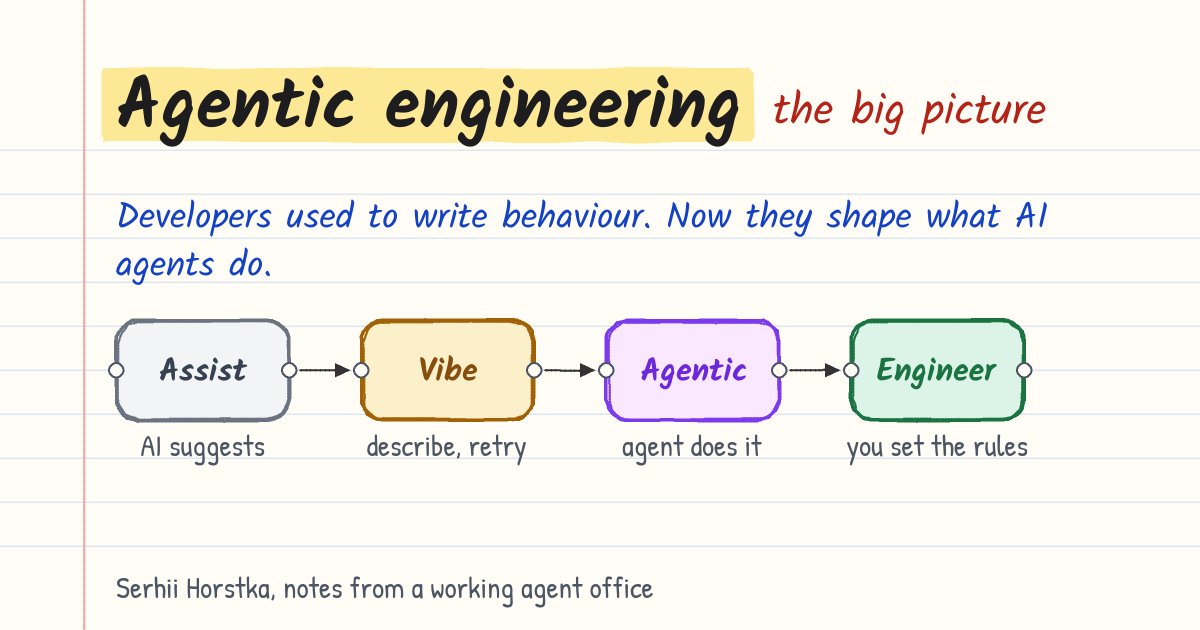
Agentic engineering means designing the setup in which AI agents do the work: what they're asked, what they can touch, how their work is checked and who signs off. For decades developers wrote behaviour, line by line. Now they increasingly shape it.
Think of a cook who becomes the head chef. They cook less themselves. They write the menu, set the kitchen rules and taste every plate before it leaves the pass.
Where it sits: from typing code to running agents
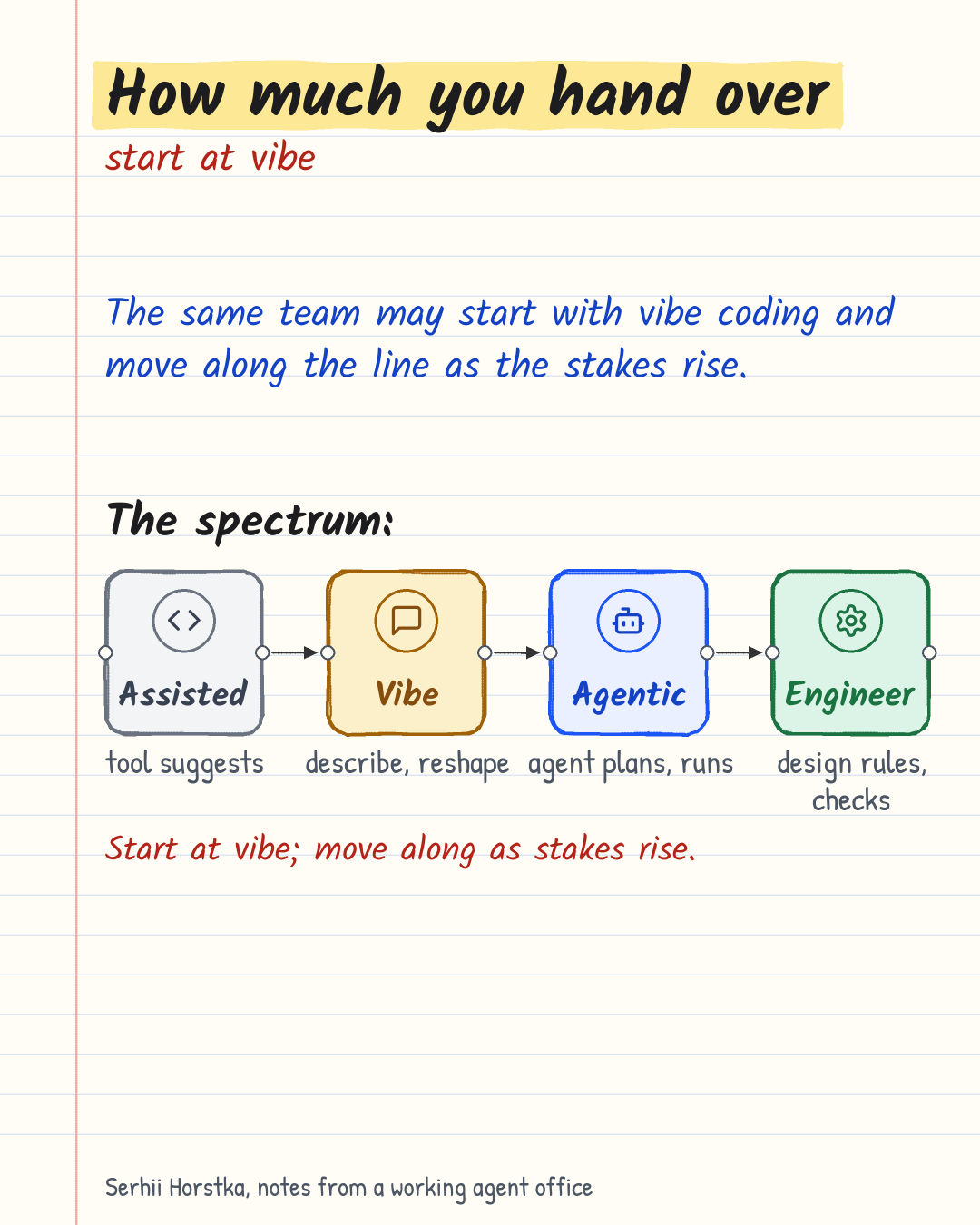
It helps to see the terms people use as one line, ordered by how much of the work you hand over:
- Traditional coding. You write every line and every rule.
- AI-assisted coding. The tool suggests and completes; you still drive.
- Vibe coding. You describe what you want in plain words and shape the result by trying again. Great for prototypes, risky at scale.
- Agentic coding. The agent plans, writes, runs and fixes code with little supervision.
- Agentic engineering. You design the rules, limits and checks that let agents do that safely, again and again.
None of these is wrong. Teams often start with vibe coding and move along the line as the stakes rise.
The 5 questions
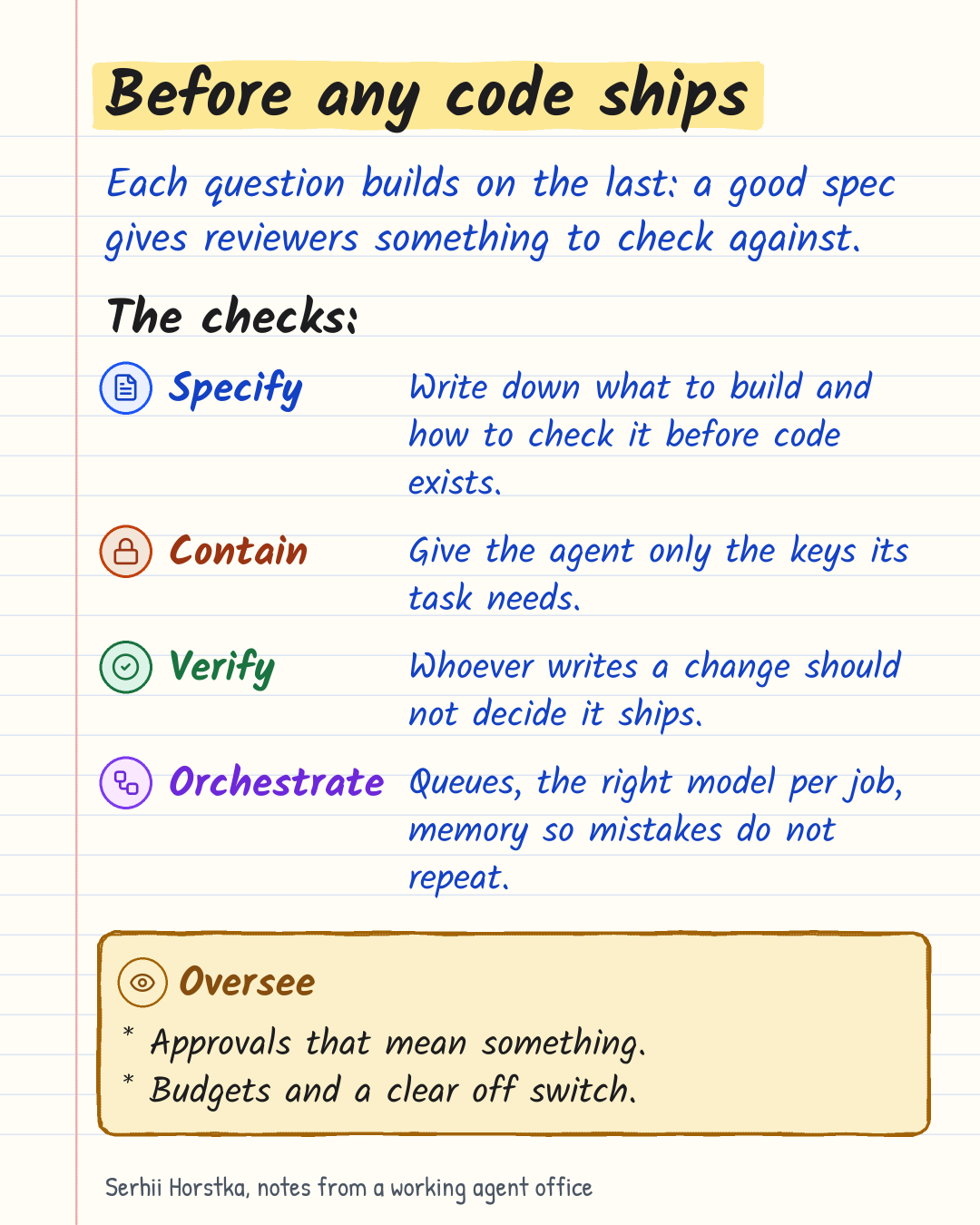
Everything in agentic engineering hangs on five questions. The next posts take them one at a time.
- Specify: does the agent know what you meant? Write down what must be built and how you'll check it before any code exists. Next post: spec-driven development.
- Contain: what can the agent reach? Give it a closed box with only the keys its task needs. Post: agent sandboxing.
- Verify: who checks the work? Whoever writes a change shouldn't decide it ships. Post: AI code review.
- Orchestrate: how do many agents work together? Queues, the right model for each job, and memory so mistakes don't repeat.
- Oversee: where does a person stay in charge? Approvals that mean something, budgets, and an off switch.
The five connect. A good spec gives the reviewer something to check against, and a sandbox makes a review mistake survivable. Oversight sets the limits for all of it.
A real example
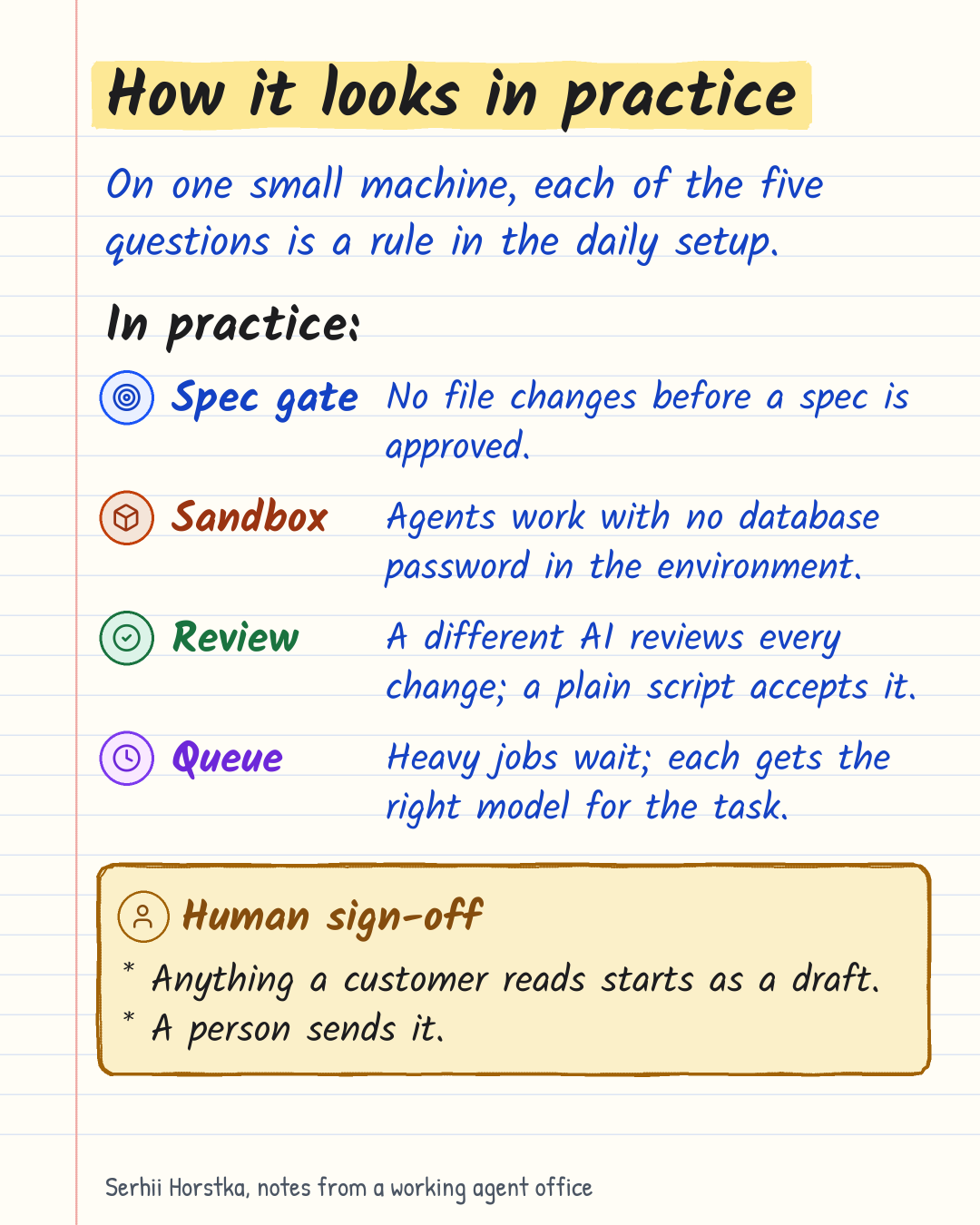
In my own projects, one small computer runs a team of AI agents, and each of the five is a rule there. No file changes before a spec is approved. Agents work in a sandbox with no database password. A different AI reviews every change and a plain script accepts it. Heavy jobs wait in a queue, and anything a customer reads is only a draft until a person sends it.
The short version
Specify, contain, verify, orchestrate, oversee. The agent does more of the typing, and the engineering moves into the setup around it.
Agentic engineering is still engineering. It just moves.
Which of the five is the hardest for your team right now?