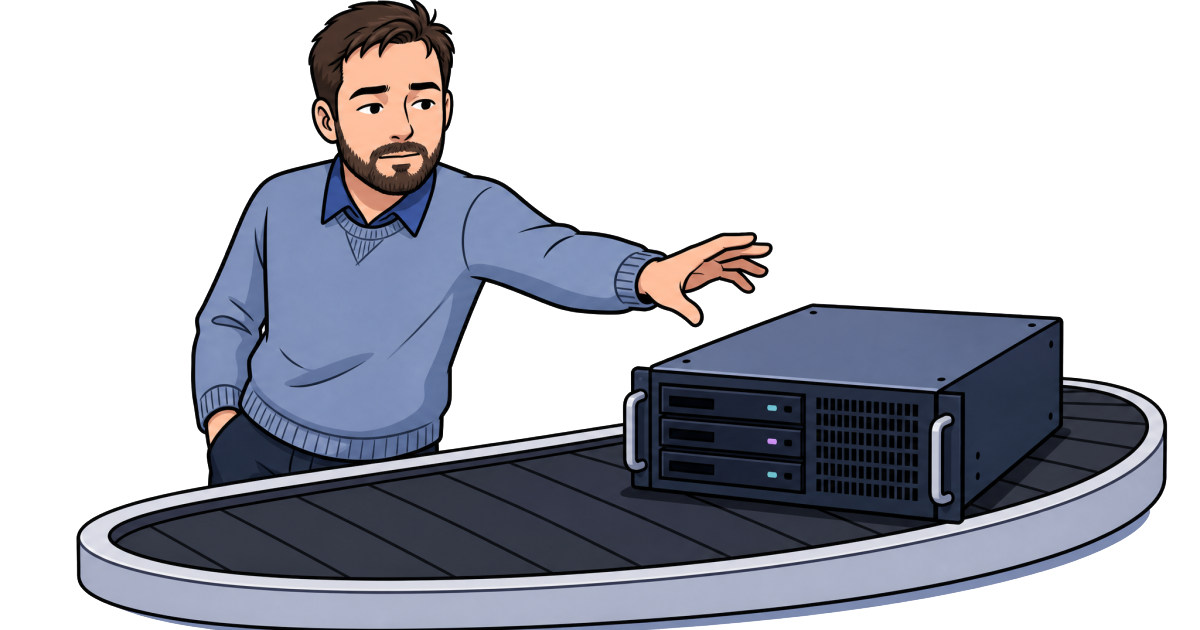
Built by AI in a day, orphaned for six months

Picture a Thursday afternoon. Someone asks an AI to build a small helper program, the kind that sends reminder emails or tidies up old files every night. By teatime it's running. Everyone's pleased. Nobody writes down whose it is, because that feels a bit premature for something that took three hours.
Six months later it stops working, and the question in the room is: who do we call?
Slow used to do the paperwork for us
When building something new took weeks, ownership sorted itself out during the wait. Someone asked for it, someone approved it, and someone's name ended up on a page somewhere. Annoying, but the slowness forced the question.
AI takes away the wait. The question stays.
I build this way most days, and the speed is real. So is the gap it opens between "this exists" and "we know who looks after it". GitLab's research from June 2026 put the same gap in survey form: organisations are generating AI code faster than they can control it.
The obvious fix backfires
The instinct is a gate: nothing gets built until someone's named as the owner.
It sounds sensible. It also hands all that speed straight back to a waiting room. And the quickest way through the gate is to name someone who doesn't really want the job. A pretend owner is worse than none, because with none, at least the gap is visible.
Build first, name an owner by a deadline
The rule I'd start with: anyone can build something new straight away, and it gets a named owner within two weeks or it's switched off.
Building stays fast. The question moves to the end, where it no longer slows anyone down. And doing nothing has a consequence: if nobody wants it, the system decides for you.
Two weeks is long enough for a real conversation and short enough that orphans don't pile up quietly, like mystery tins at the back of the cupboard.
Making the deadline mean something
The predictable dodge: someone puts their name down on day thirteen just to stop the clock, then leaves the team two months later.
So a name alone doesn't count. The owner says yes in their own words, writes a few lines on what it does and who relies on it, and their team lead confirms. It takes a few minutes, and it turns a name in a box into someone who'll pick up the phone.
The part I haven't settled
Some things get a real owner and then quietly fall out of use. A rule like "if nothing has used it for 30 days, the owner explains why it's still running" helps. But agreeing what "used" means for every kind of program is its own argument, and I haven't won it yet.
So the rule covers the birth well and the old age badly. It's still where I'd start.
Teatime builds are wonderful. Just make sure somebody's name is on the tin.